
Splendor Solis Plate #2

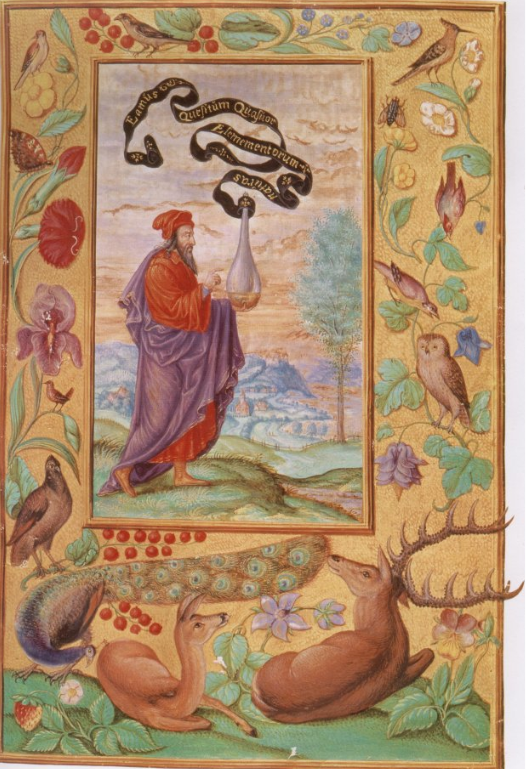
Welcome back, dear reader, I hope the last week has found you well. From the feedback I have received, it sounds like this series has been well received so far, if this is the first issue of An Emerald Tablet that you are receiving, we have recently begun a systematic walkthrough of the 22 images, or plates, in the book, the Splendor Solis. Today we will be moving forward with the slightly deeper understanding of the work that we gained last week. As a quick reminder, we covered the first plate last week and it works as a form of title page, showing that the manuscript will contain important spiritual wisdom that will explain how to turn the gold that you have just created into the spiritual or philosopher’s gold. Today we will be moving to the second plate and while it is a very simple image, it contains a lot of information. As a quick note before we get too far, the original manuscript does contain text, we will not be addressing the text much in these discourses as we are dedicated understanding the images themselves, however we may reference the text briefly if it is applicable to what we are discussing.
Let us begin with the border where we see the often-repeated saffron coloring. This, as we noted last week, signifies the fact that the information that you will gain from this book is meant to be of a high spiritual level. It is important to remember when reading these images that the border often provides the foundational information for understanding the central image itself. The border of this plate gives us some valuable context for the rest of the image and it does so with several different kinds of symbols like plants and animals. In order to keep things organized, let us take a look at the plants first.
While there are many different kinds of plants in this border, some of the ones we can easily identify are tomatoes, orchids, strawberries, daisies, and chrysanthemums, all of which allude to the same meaning. That meaning being reproduction and sexuality. Tomatoes have long been considered a symbol for sensual knowledge, love, and reproduction because of the number of seeds inside and also because of the acidic nature of the fruit. These connotations have transcended locations and practices as many traditions include symbolism or use of tomatoes in imagery and rituals pertaining to love and sexuality. The next flower we see are orchids, with their name in old Greek meaning “testicle” they also convey the same meaning that the tomatoes have started this whole border off with. However, along with the idea of sensual knowledge that the tomato brings, the orchid also adds to that with the idea of spiritual perfection. I believe that this additional accent put onto those symbols is very important to this image so as we move forward, I want you to try to remember that we have not only been seeing a lot of sexual imagery, but there is a strong undertone of perfection or wisdom as well, as this portion is often overlooked. Moving down to the bottom of the image we can see a large strawberry, and you may be surprised to find out that the plentiful seeds on the outside of the fruit cause this berry to symbolize reproduction. But something I find very interesting in relation to the text around this page is that the strawberry is not fully ripe but is in the process of ripening which is mentioned in the text that accompanies the image, we will address this a little later. But, just like the other plants, the strawberry is closely associated with holy things such as the blood of Christ and the trinity in Christian iconography, and is said to grow in the fields of Elysium or the place where the gods live in the Hellenistic faith. Our next two flowers take a turn from the idea of reproduction specifically but that does not mean that they are meaningless to the image, these flowers are important in the translation of the full picture. First, we will look at the daisies, these small white flowers are some that many of you may be aware of the symbolism associated with them as they are popular in flower arrangements and gardens today. These flowers symbolize innocence, loyal love, purity, beauty and respect, which I think are extremely important when reading symbols that point toward sexual energy. This is saying that what we are talking about is not a purely physical form of love or reproduction, looking to the Greek is my favorite way to explain this idea because the language has a wonderful way to separate different kinds of love. We are not looking for the “Eros,” or erotic kind of love between romantic partners in this image, we are looking for the “Agape” kind of love, which is pure and innocent, but it is not unconditional. This form of love requires loyalty and respect; it is only going to be present when it is treated properly. This is carried a little further with the final flower we will speak about, the chrysanthemum, which often symbolizes gold, the sun, longevity, and eternity. Gold and the sun are reminiscent of the perfection and respect that the daisies mentioned before but also gives clarification that the perfected love we are looking for is eternal, it is not going to change based on our whims or anything short of being treated poorly and disrespected. This is a perfect love, the full coagulation of love that we will speak about later.
Moving on to the animals on the border we are initially met with many of the same birds that we were on the first plate; songbirds which show that we are dealing with spiritual topics and that they are hidden in the language of the birds, woodpeckers symbolizing wisdom as well by invoking the god Odin, and the owl which has long been associated with wisdom and silence and invokes the goddess Athena. These are simple and beautiful reminders of the two important facts contained within these pages, they are important spiritual wisdom, but they must be explained in the language of secrets and codes. At the bottom of the image, we see two pairs of animals that we have not seen in the previous plate, and they continue the imagery of the plants. To begin, the peacock and the peahen are common alchemical symbols as they are often associated with the philosopher’s stone, the rising of oil/soul/sulfur from the first matter, and the spiritual sulfur. The peahen is less common than the peacock but having them both together is a symbol of a perfected love, it is another version of the Queen that we have worked with previously in the Great Work. The final large animals that we will talk about, the deer, are similar to the peacock and the flowers in that having both sexes does invoke the same ideas of love and reproduction as the rest of them, but deer are closely associated with the gods in many traditions. In the Celtic tradition and many around Europe, the deer is said to be a part of the fairy realm that is able to move between the spiritual realm and the physical. This is also seen in many indigenous traditions in North America, so it should be noted that the love that is found between these two animals is going to be one that also consists of a deep spiritual portion. These two couples are often equated to the kings and queens of their respective realms.
We will finish our border with two final animals, the only two insects on the plate, the fly and the butterfly. I think that these two symbols are a fascinating extra reminder of what we are talking about. In many cases in alchemical works there are many, many, many layers of repeated symbols so that at some level you are able to understand what is going on. The fly in this case is often a symbol of something that is often attracted to the mundane or the corrupt things in the world. They are often found swarming around things in nature that stink, and that is the same idea they are often used to convey when they are used in art. The butterfly on the other hand, is a common symbol I am sure you are familiar with; it is a common symbol for transformation. As we all know, the butterfly emerges from the cocoon or chrysalis after moving from the caterpillar stage, through a liquid stage, and finally being reborn as something completely new. I believe that these insects provide some very important context, the love and the knowledge we are discussing in this image are the kinds that must be transformed completely from their mundane form where we chase after the dirty things in life to the new, beautiful, and purified version.
With this important distinction now being driven home again, we finish the border of the plate and we can begin to look at the central image. This image is quite simple as much of it is blank space and filler. We see a hermit or philosopher holding a large flask that is partially filled with a gold liquid and from the flask is coming a black ribbon with some Latin text on it. Behind him we see that he is standing on a cliff or hilltop overlooking a village. The robes our philosopher is wearing retain the color imagery from the previous plate, the red and blue show that he has completed the red stage of the Great Work and has earned his red robes, and he is wrapping them with the cover of the blue robes often associated with the heavens and the knowledge or wisdom of the gods. The vase he is holding and pointing to, and the ribbon coming out of it are the vocal points of the image and the last things we will be focusing on today. The flask filled with a golden liquid is what the philosopher created in his previous work; it is probably the product that earned him his robes. I think this is shown additionally through a slightly altered version of the symbol for “elixir” at the top of the flask. The symbol is normally a circle with a cross in the middle separating it into 4 quarters, it is then topped with a triangle with a dot in the center. The top of the flask does not exactly match the symbol, but it is very close and having it on top of the Grand Elixir only strengthens the argument in my opinion. Now the ribbon coming out of the flask is very interesting, it reads “Eamus Quesitum Quasuor Elememtorum Naturas” which means “let us investigate the four elements of nature.” This text coming out of the flask reads like the breadcrumb leading the alchemist on a new quest following the fractal nature of the Work and moving deeper in our understanding. The completed elixir was the goal at one point, but once it is created, we can either end our work there or realize that there are greater tasks we can now work on. In the text that accompanies the plate, it explains how alchemy is a “greening” or ripening process, and it is shown again by the strawberry we mentioned previously. That is a wonderful example of how the Great Work works and what I believe this ribbon refers to. It took years and an extensive level of mastery for the alchemist to create that golden elixir in his flask, but now he is entirely enthralled and focused on this new quest that he has been offered. Now that he understands how to create the stone, he can take that new level of understanding and go back and begin looking at the elements of nature and gain new truths from them. One of the important truths about nature that I believe we gain from this image, placing all of the symbols and the text together, is that alchemy is a science of transforming nature but it is not commanding nature or ruling over it as a tyrant would. It is working within the framework of universal cosmic law and changing the timeline in which natural processes occur. We must operate in the language of secrets, and we must unite the masculine and the feminine or marry the king and queen, but this cannot be a purely physical union it must be a union that takes place on all levels, it has to be transformed from the dirty mundane love to the beautiful pure love that respects others and is respected in return.
I want to stop here today, I know that there could be many more pages written about each of these plates, and luckily there already have been many books written discussing these works. I do not want to overwhelm any of you, or quite honestly me, by trying to cover in great detail every single aspect of the images we are looking at, but if your interest has been piqued I highly recommend reading any of the other works covering the Splendor Solis. You can never learn too much information. I look forward to hearing your thoughts and opinions in the comments or discussion below and I look forward to covering the third plate next week.
As for a little housekeeping information here and updates for those of you who are interested, you may have noticed a small change on my bio and that is that An Emerald Tablet is now a product of “The Pelican Society,” this is a 501(c)3 that has been created for the preservation of alchemical history and the rigorous academic research of alchemical theories and practices. This has been a project that I have worked on with an incredible team of alchemists for a very long time and I am so excited to say that it has finally come to fruition. I hope that this means we will be producing a lot more content for you in the future as well, we have already been in talks about more Substack content from other members of the society, but also audio and video content that is a little easier to digest and we can break down these difficult concepts into simpler terms. I cannot wait to share this information with you once I have some more concrete answers in place and I thank you so much for your patience in the process. I cannot wait to see you again next week when we discuss the fascinating images found on plate 3, thank you so much for your time and support, and I hope the next week finds you well.

Resources:
Nozedar, Adele. The illustrated signs & symbols sourcebook: An A to Z compendium of over 1000 designs. Harper, 2010.
Skinner, Stephen. Splendor solis. Edizioni mediterranee, 2021.