
Splendor Solis Plate #1

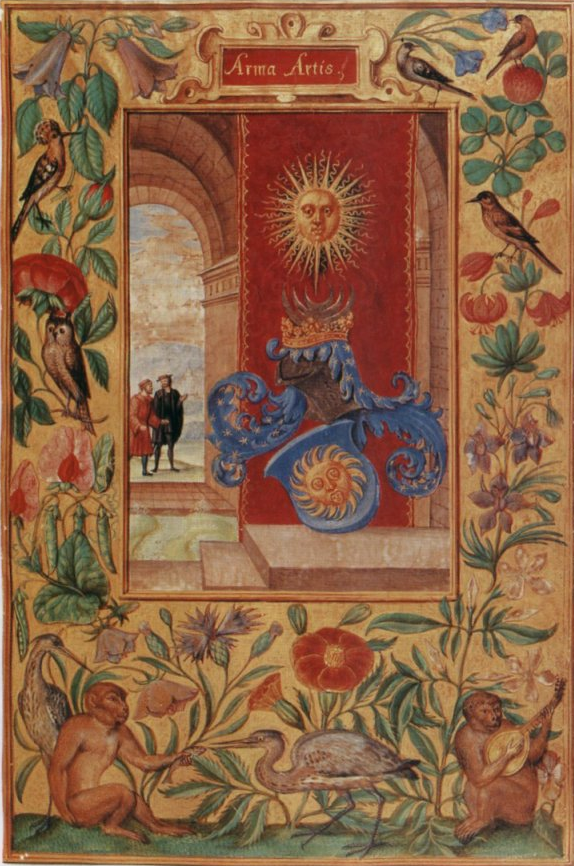
Welcome back, dear reader, I hope the last week has found you well. Our last discussion introduced our next new series with the basic information about the Splendor Solis, today we will be taking our first real step into the meaning of this book with the first plate. This series has been a difficult one for me to really plan out, I don’t want it to just be me explaining what you see in front of you, I feel like that is something you can do without my help. At the same time, I don’t want to just regurgitate the many pages that have already been written about this book or just read off the meaning of different symbols, again, you can find both of those things on your own. What I want to do with this series is continue our education in the Green Language. We have covered many different symbols in our previous studies and these symbols work like hieroglyphics, they don’t just mean words, they mean concepts, and when you put multiple of them together, they can create sentences and stories instead of just pictures. So, my goal is to take us from being able to read single symbols in the Green Language, to knowing how to read full pages and books. To achieve this, we will be covering some of the symbols in the page and what they mean, then we will work to combine those images into what the page is trying to say. With that being said, I think the first plate is a great place to start, because it contains a lot of simple symbols used to create something like a simple title page.
With so many things to look at let us begin where it makes sense, at the top and with the outer border. At the very top of the page, we see the Phrase “Arma Artis,” Latin for “the weapons (or arms) of the art” which works kind of like a title for the work. This book contains the tools that you need in order to conduct the mystical Art. As we move out from the title and we begin to take in the full border of the image we are met with the saffron or gold background that holds all of the other images. Saffron, and to a lesser degree the color gold, invokes the idea of wisdom and spirituality. This is the reason that many Buddhist and Hindu monks wear saffron colored robes and anoint the images of gods with saffron paste. The use of it so prominently on the border of many plates is likely to denote that the information held in this text is meant to provide the correct reader with some deep spiritual wisdom. I feel this interpretation is further backed up by the fact that all of the next images we are about to cover are then found inside this sea of saffron or gold wisdom. We are going to break these symbols down into some groups so that we can keep track a little better, since we covered the title and border itself, let’s move to the next most numerous images, the plants.
There are a lot of different plants in the border, some of the ones that I can immediately recognize are roses, apples, peas, thistle, and what I believe is Datura. Roses are a common symbol that I am sure we are all somewhat aware of, the symbol is well known for love today, but it has also always been associated with human consciousness. The rose is a lot like the lotus when it comes to its meaning in art, it shows the triumph of perfection and the spirit over the basal form of nature and earth as something so beautiful grows from something so plain. That same imagery is carried forward into the human consciousness and alchemically it is associated with the growth of the pure spiritual consciousness from the material form of the body. Apples, being a part of the rose family as well, help further focus the idea of spiritual growth in this image as well. The apple is very closely related to a mental, spiritual, or other sort of awakening in western art for hundreds of years. Since it’s use in the images of the garden of Eden and the tree of the knowledge of good and evil, it has often been used as a way to show that the work is going to provide the reader with a piece of information from the divine that will change them from their base self into their more complete self, and the use of the rose at the same time tells us that the spiritual information that is being given to us will help the development of the soul from the material body.
Peas take us in a slightly different direction, while the pea is used as a symbol of reproduction, abundance and fertility, those specific concepts don’t really apply to the image we are working with, but their other meanings apply much better, growth and prosperity. If you use the information in here that will cause your soul to grow and advance from the simple medium of the physical body, you will be blessed with growth and prosperity, these are something that alchemy has always promised. The last two plants we are going to discuss were a little surprising for me to see on the plate, but the longer I studied the more sense they made. The thistle is often very quickly associated with warfare and passive protection, which makes some sense in alchemy, the information in the book is supposed to be very well protected, that is the reason it is written in a language of symbols and not in common German. However, thistle is traditionally said to cure depression, the smell of the plant and a wine made from the flower are said to have the ability to make people feel better and cure what used to be called melancholy. I find the dual meaning of this image very interesting and it’s prominence near the monkey at the bottom seems to show that the information inside is protected and, if you rush into it without thinking, it will come to bite you in the end, but if you come to the work with the proper knowledge and the proper respect, you can find the information held within to help you find that peace and joy that we are all looking for. The vine and bell-shaped flowers at the top that I think are datura are some of the most interesting symbols within this plate in my opinion, and mixed with the meaning of the thistle it brings the picture together in a different way than I originally expected to see. The bell flower as a general flower is often said to mean humility, constancy, and gratitude which are qualities that I would expect for you to learn in this book, as we said with the thistle, it is supposed to help bring joy and remove sadness and these traits of the bell flower would come along with that change. But the fact that they resemble datura, a powerful poison that can also work as an entheogen in the right dose, is fascinating to me. This book is regarded as coming from the teacher of Paracelsus who pioneered the idea that the dose makes the poison, and the image contains a hallucinogenic entheogen that can either awaken or destroy you based on the dose? That doesn’t seem accidental. I believe these images together are showing that first, the work can and will awaken and open your mind and soul if you use it properly, but if you rush into it and use it for any other purpose than the exact purpose it was created for, you may drive yourself mad or worse. This may seem like I am reaching for meaning to those who are not very familiar with the way alchemy works, but this warning is repeated over and over on a regular basis in works of alchemical knowledge.
After the plants, we have several animals within the border of this plate, the most obvious of these are the many different kinds of birds, and the monkeys. Monkeys in the west often bring up symbolism of humanity in its natural state. I think this comes from the way evolution works in the mind of the common man and the way Christians used them in their art in the past as symbols for humanity before they received the grace of god. However, since this is a very old piece I think we should go with an older meaning of monkeys in art and that is intelligence, decisive action, playfulness and wisdom. In Egypt, the birthplace of alchemy, monkeys and apes were disciples of the god Thoth, the god of wisdom, magic, and writing. Monkeys and apes are also capable of learning to use tools just like people and so they have long been used as analogs for humans in art.
Between these monkeys and all around the border, we can see many different kinds of birds, each one with their own meaning. The first we will note is closely related to the monkeys we just spoke about, the owl. This bird has been associated with wisdom, cunning, and silence for thousands of years. The owl is the only bird that can fly almost completely silent in the night air and this was the same way the wisdom of alchemy is passed, silently and in the dark of night. Right in the center of the bottom is the heron, a beautiful and graceful bird that has been closely related to the ibis in alchemical imagery for a very long time. The ibis was another animal related to the god Thoth, and I don’t think it is an accident that a heron and monkeys appear together in this work when the ibis and baboon were both the animals most closely related to wisdom at the time alchemy was created. Another easily recognizable bird in this work is the woodpecker, a bird related to another god of wisdom and magic, Odin. It is connected to Odin, and also Mars, because of the pecking sound it makes, the sound is said to sound like, bring, or warn of thunder in different traditions and the way it can stick itself to a tree is reminiscent of the way Odin hung on the tree in order to gain the wisdom of the runes. That is three different birds that are used in more than three different traditions to signify the same thing, wisdom. I believe that these birds of wisdom and the group of songbirds elsewhere in the border are noting to anyone reading that the book contains wisdom but it is written in the language of the birds, the green language of symbols. The border seems to be saying that the plates within are filled with spiritual wisdom that can bring peace and joy that is unsurpassed, but there are warnings as well. You must be able to read the language of the birds, and you must come with a pure heart and the proper reverence or you will receive the wrath of the wisdom contained within. As the border of the plate, this is a very general statement, almost like reading the inside cover of a book before you buy it today, the image in the center of the plate gives us a more detailed explanation of what is hidden within.
In the central image of this plate, we see two men standing outside and looking into a room where a blue shield topped by a helmet covered in blue and a crown is surmounted by a golden sun, this image is a little strange but it does give us a much more detailed description of what is in this book. First the main colors in the center, the red and the blue. The red color that the top sun is in front of is a popular symbol in alchemy, it is the rubedo, the red and final stage of alchemy. Red is a color of vitality and fire but also of the sun, the image that is right in front of it. These two together likely show that the red is signifying the rubedo stage that was used to create the gold sun in front of it. Below that sun we see the helmet and shield that are all covered in blue, the opposite color of red but not another alchemical stage. Instead, this color is classically related to wisdom, loyalty, peace, and spirituality, These are all going to play a part in the explanation of the second sun that is on the blue shield, but first let us cover the helmet and crowns, they are very important to being able to properly translate the image.
The armored helmet is used to symbolize the things a real armored helmet is used for, protection, power, invulnerability and anonymity or secrecy. Being placed atop the shield would show that the bottom sun is being protected and possibly kept secret by the protection of the armor, the blue over the top of the helmet shows that the protection is not just a mundane level of protection, but it is a royal, spiritual kind. This is added to by the presence of the crown and the three silver moons. The crown is used to show royalty, power, eternity, and authority the triple moons on top show that it is a crown for someone of a very high level of royalty. All of these symbols make sense when they are seen together but the way they are positioned and read are actually wonderful examples of how the green language works, I think you will see that as we discuss the suns next.
The two suns in this image are quite different, and they are actually saying a lot about what is held within this book. As we said before, the top sun is mounted on the red background. This gold is likely the perfect gold that was produced by transmutation with the philosopher’s stone. This can be seen not only by the red background but also the amount of detail on the face and the rays of the sun, a highly detailed sun like this would be used to show gold of a very high purity level. The lower sun however, is where the image really gets interesting. The sun on the bottom of the image has three suns inside its face, reminding us of the three moons on top of the crown, and this sun is the purpose of this entire book. This sun, being held on a blue shield and topped by a helmet with a blue cover and a gold crown with three moons is the goal of the Splendor Solis. It is the spiritual sun! This highly detailed sun is held on a blue shield; it is an extremely pure gold that is of a spiritual nature. But something that is this important must be protected too, and that is the purpose of the helmet. The blue and the crown on top of the helmet are showing that this protector is royal as well because we need protection from something of equal footing as the philosophical sun.
This is the entire point of the book; this is the sacred wisdom we were told we would find within the plate and the reason for the warnings of the border. This book is about the fractal nature of the Great Work, it is taking the purest gold created by the Stone and realizing that that is still not the true goal of our work, there is another level for us to reach. So many people will be able to reach their goal in alchemy, especially mental alchemy, and they will be able to correct certain aspects of themselves then they will stop working, but this is only half the job, as soon as one thing is completed, we will find a higher state to obtain and a new goal to reach toward. This is another reason I felt that this book would be a great place for us to move next, not only will we be practicing the green language, but we will also be deepening our understanding of the fractal nature of the Work. Now that we have this understanding of what we should expect to find within this text we know the lens we must read all of the following plates with. But I want to stop here today as this has become a very long discourse and I want you to be able to integrate all of this information over the next week and have some time to study the image on your own.
I thank you so much for your time today and for all of your continued support. We will return next week with the second plate and a little better understanding of how to read them, I hope you enjoyed this breakdown, and I hope the next week finds you well.

Resources:
Nozedar, Adele. The illustrated signs & symbols sourcebook: An A to Z compendium of over 1000 designs. Harper, 2010.
Skinner, Stephen. Splendor solis. Edizioni mediterranee, 2021.